
References
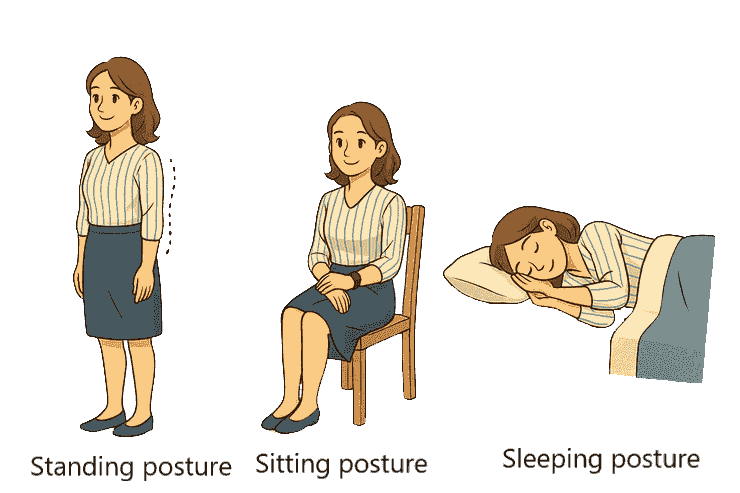
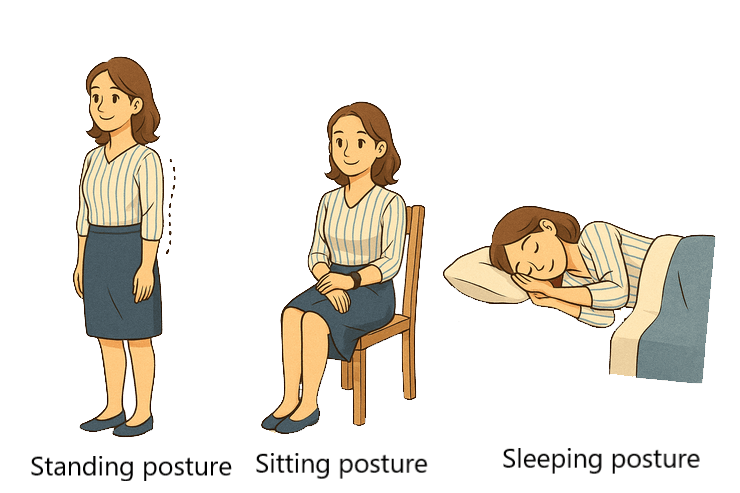
How core muscles are activated and relaxed in different postures
A study on the electrophysiological variations of rectus abdominis and erector spinae muscles in static standing, sitting, and lying down postures
Image source: Right-thinks Health Service Center
Data source: Master’s Thesis by Jia-Fen Wu , Department of Sport and Health Sciences, National Taiwan University of Sport
Database: Taiwan Academic Institutional Repository (Taiwan Theses and Dissertations System)

WHO states that prolonged sitting is harmful to health.
According to the latest Chinese guidelines issued by the World Health Organization (WHO), prolonged sedentary behavior is associated with an increased risk of cardiovascular disease, diabetes, and higher mortality rates. Adults are advised to accumulate at least 150–300 minutes of moderate-intensity physical activity per day, while minimizing sedentary time.
Source: World Health Organization (WHO)

Science and Health: Why Sitting Less and Standing More Benefits Your Health
Experts point out that “sitting less and standing more” can increase heart rate, boost metabolism, improve bone health, and contribute to better mental well-being. This simple change has a positive impact on overall health.

Understanding Sit-to-Stand: A Key Measure of Patients’ Physical Activity Function
The sit-to-stand movement is one of the most frequently performed daily activities. Healthy adults typically perform this action about 60 times per day on average. Efficient sit-to-stand ability is a key factor for independent living. Clinically, the sit-to-stand test is often used as a predictor of lower limb muscle strength, decline in physical function, and risk of falls.
Image source: Physical Therapist Off Duty
Data source: Taiwan Society of Geriatric Medicine

A multifaceted exercise program for frail elderly people was explored
- Significant Reduction in Sedentary Time
The multi-component exercise program effectively reduced sedentary behavior among frail older adults and increased their daily physical activity levels. - High Safety
The program was proven safe for this population, with no serious adverse events or injuries reported. - Good Adherence
Participants showed high levels of engagement and compliance, indicating that the program is feasible and appealing.
Image source: Pixabay
Data source: Science Direct
- Significant Reduction in Sedentary Time